
thiamine
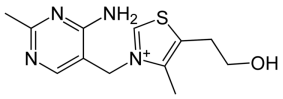
Thiamine molecule.
Thiamine, also known as vitamin B1 is a member of the vitamin B complex. It plays a key role in the functioning of various enzymes involved in the metabolism of carbohydrates. Thiamine is destroyed by heating above 100°C in water solution.
Sources of thiamine
Foods that are especially rich in thiamine include whole grains, wheat germ, enriched flours, brown rice, rice bran, oatmeal, egg yolks, fish, poultry, pork, liver, kidney, green leafy vegetables, Brussels sprouts, asparagus, peas broccoli, legumes, peanuts, sunflower seeds, dried soybeans, kelp, Brewer's yeast, avocados, raisins plums, and milk. Vitamin B1 is highly concentrated in the germ of cereals. The single richest source of it is Brewer's yeast.
Thiamine deficiency
People susceptible to thiamine deficiency include those with a diet that has too much sugar and white flour products (white flour contains 13 times less thiamine than wheat germ) and those with hyperthyroidism (overactivity of the thyroid gland), malabsorption, and severe alcohol dependency.
Mild thiamine deficiency may cause tiredness, irritability, loss of appetite, and sleep disturbances. Severe deficiency may cause constipation, abdominal pain, depression, memory impairment, and the disease beriberi (which may be fatal). In sufferers of chronic alcoholism, it may cause Wernicke-Korsakoff syndrome.

